
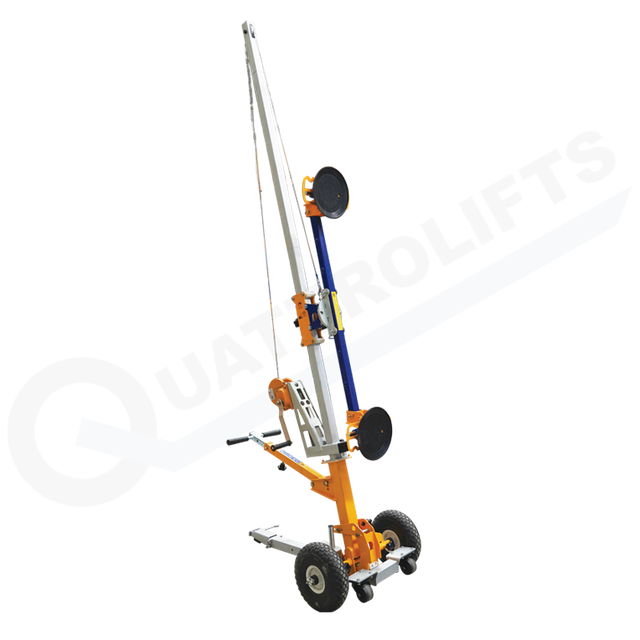
Express
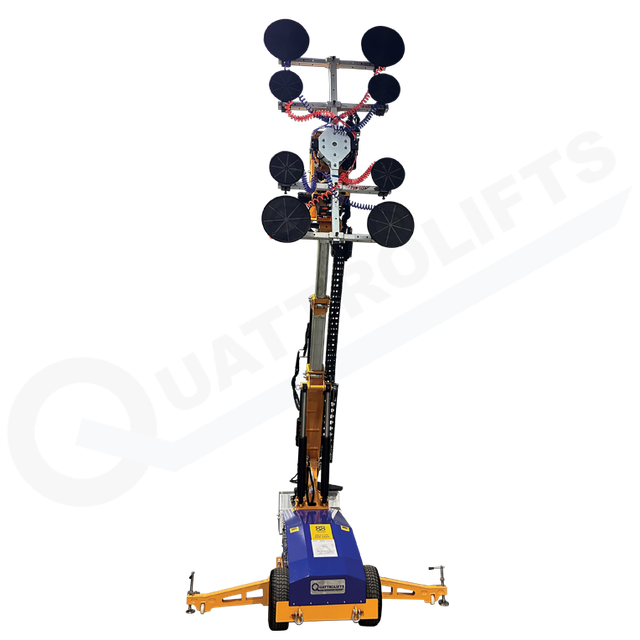
Express 330T
Lifting Capacity
330 lbs
Use Case
On-site
Drive
Manual
Max Panel Size
144" x 60"
View Details
Quattrolifts vacuum lifters
Vacuum lifting equipment for granite slabs and countertops. Lift, tilt, and place granite from 330 lb to 1,800 lb (150 to 820 kg) with one operator, in the shop and on site.
A granite vacuum lifter grips a slab across its polished face with suction pads, so one operator can move and place heavy granite without edge clamps or a crew. Polished granite is an ideal vacuum-lifting surface: flat, non-porous, and firm-sealing. Quattrolifts granite lifters span 330 lb to 1,800 lb (150 to 820 kg), covering countertop slabs through oversized architectural granite.
Quick Pick
In-shop slab handling at fabrication benches and saw tables, 660 to 1,320 lb (300 to 600 kg).
Mule RangeNo-setup attachment for granite slabs 1,200 to 1,800 lb (545 to 820 kg).
Omni RangeBattery robotic lifters for on-site granite work up to 1,800 lb (820 kg).
Vector RangeBelow-the-hook lifters for heavy granite slabs on crane or hoist.
Glassboy RangeThe Range
Express
Lifting Capacity
330 lbs
Use Case
On-site
Drive
Manual
Max Panel Size
144" x 60"
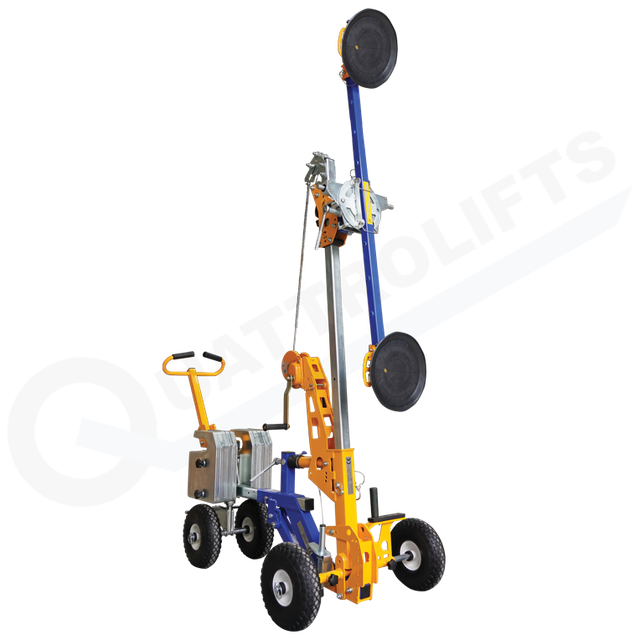
Express
Lifting Capacity
440 lbs
Use Case
On-site
Drive
Manual
Max Panel Size
144" x 59"
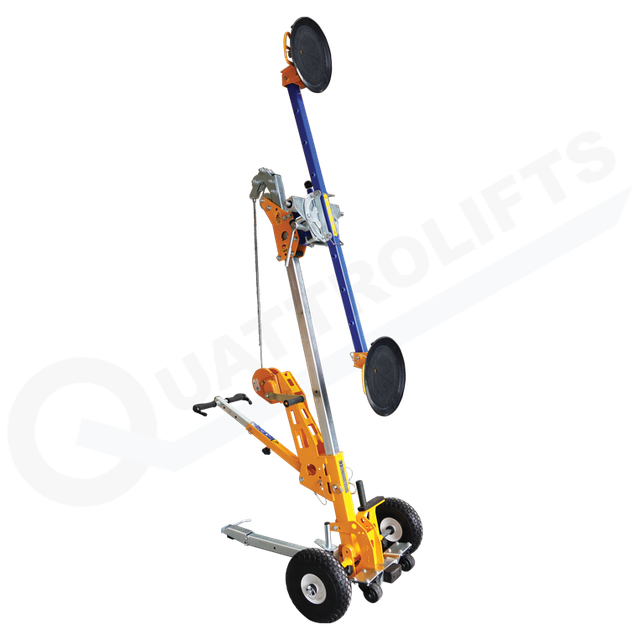
Express
Lifting Capacity
440 lbs
Use Case
On-site
Drive
Manual
Max Panel Size
144" x 59"
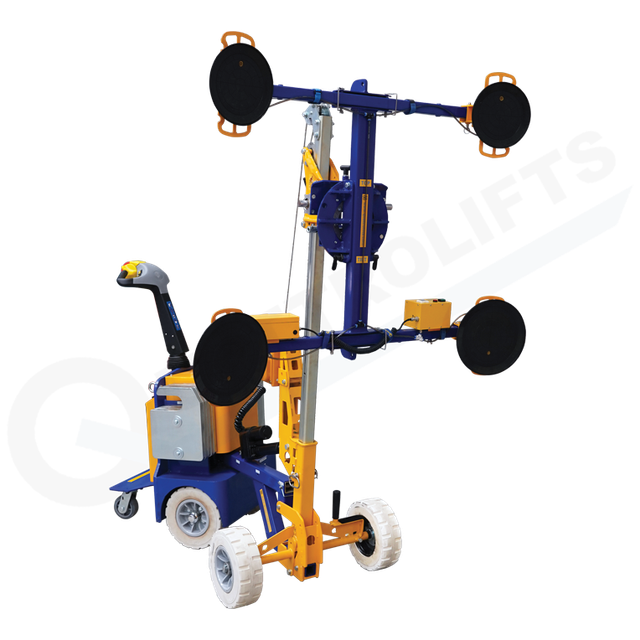
Express
Lifting Capacity
770 lbs
Use Case
On-site
Drive
Battery tug
Max Panel Size
144" x 96"
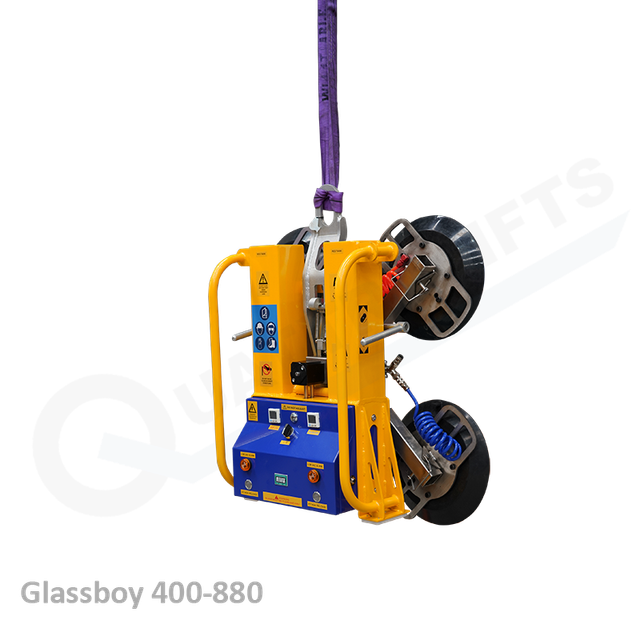
Glassboy
Lifting Capacity
880 lbs
Use Case
In-shop
Drive
Below-the-hook
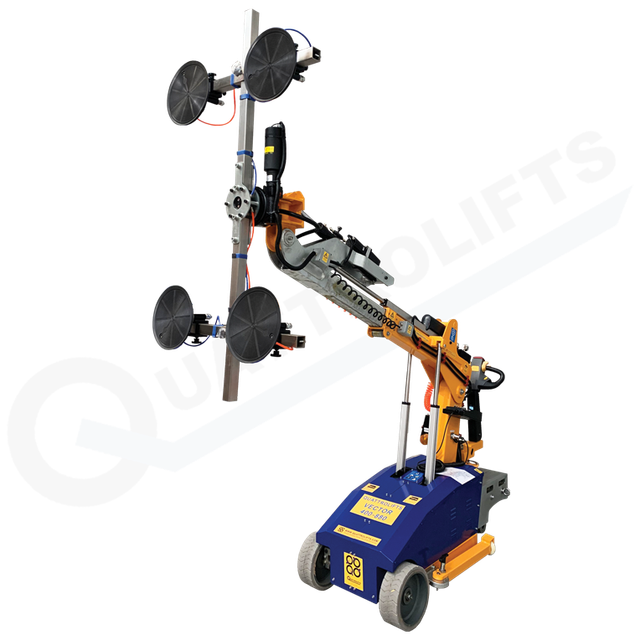
Vector
Lifting Capacity
880 lbs
Use Case
On-site
Drive
Self-propelled
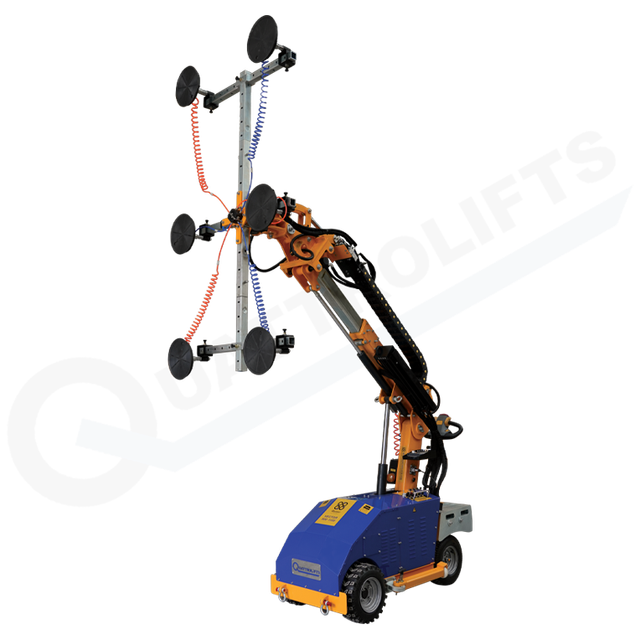
Vector
Lifting Capacity
1,100 lbs
Use Case
On-site
Drive
Self-propelled
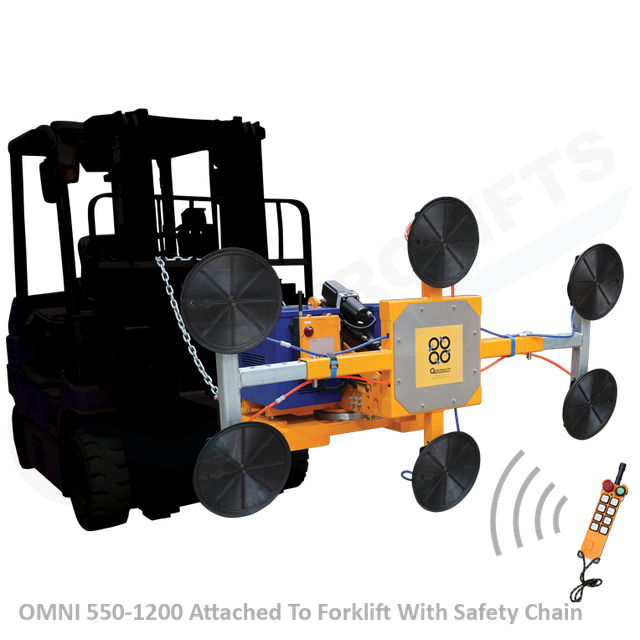
Omni
Lifting Capacity
1,200 lbs
Use Case
Forklift
Drive
Forklift-mounted
Max Panel Size
196" x 144"
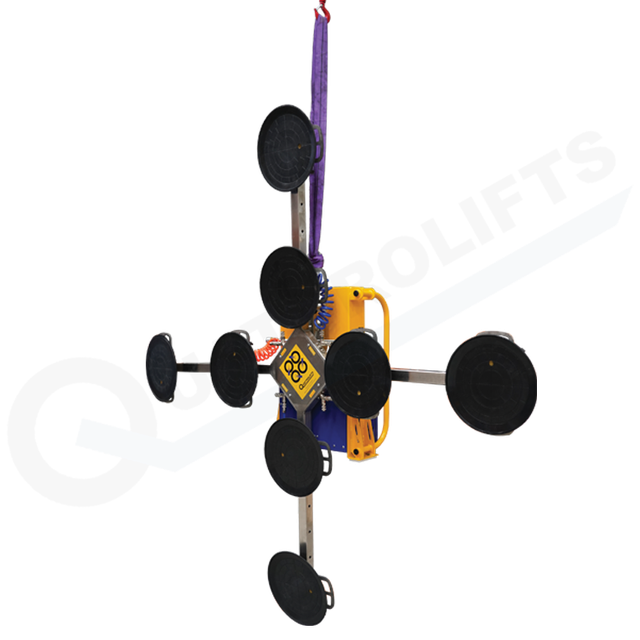
Glassboy
Lifting Capacity
1,320 lbs
Use Case
In-shop
Drive
Below-the-hook
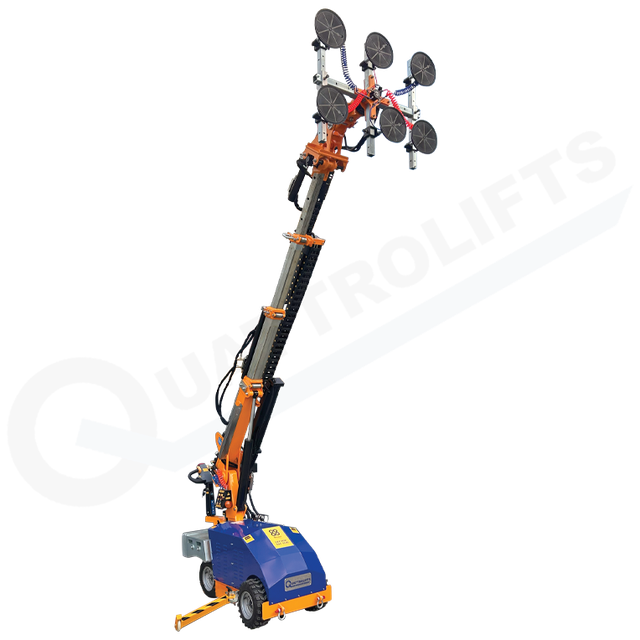
Vector
Lifting Capacity
1,320 lbs
Use Case
On-site
Drive
Self-propelled
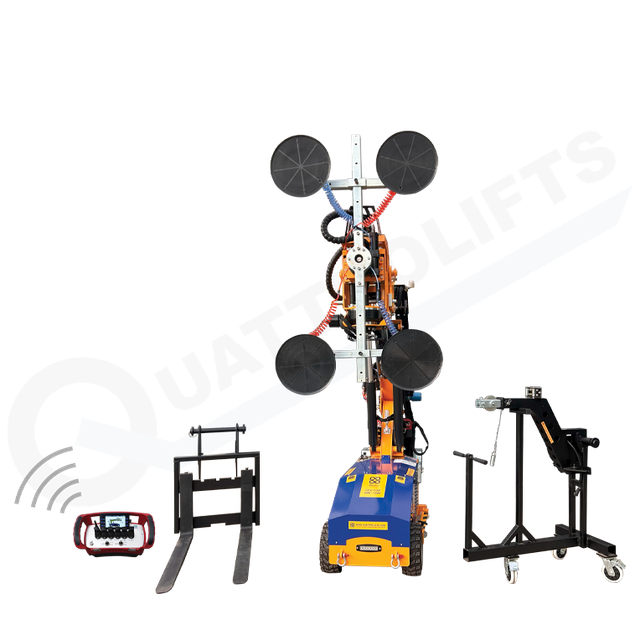
Vector
Lifting Capacity
1,320 lbs
Use Case
On-site
Drive
Self-propelled
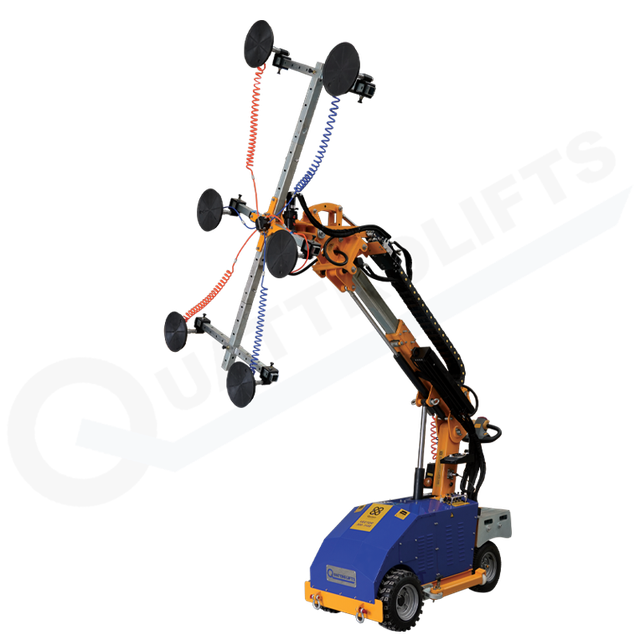
Vector
Lifting Capacity
1,320 lbs
Use Case
On-site
Drive
Self-propelled
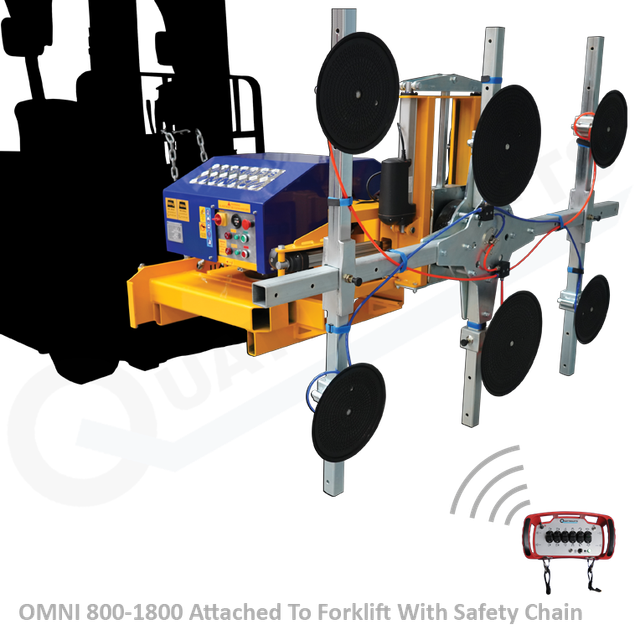
Omni
Lifting Capacity
1,800 lbs
Use Case
Forklift
Drive
Forklift-mounted
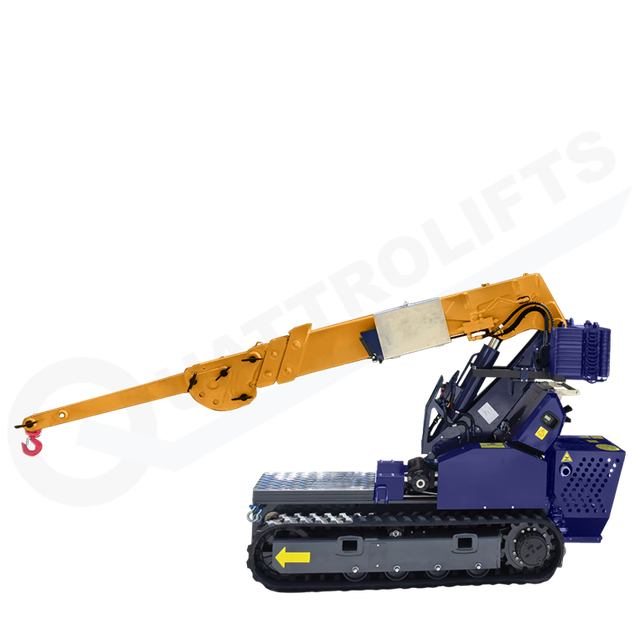
Vector
Lifting Capacity
1,800 lbs
Use Case
On-site
Drive
Tracked crawler
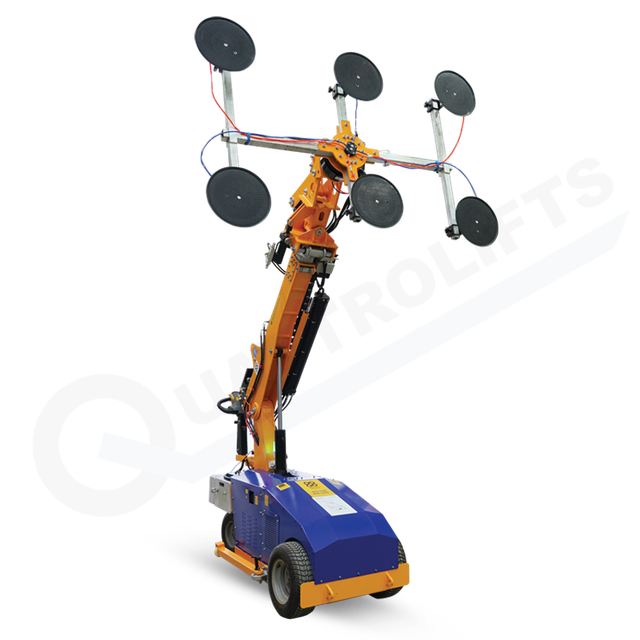
Vector
Lifting Capacity
1,800 lbs
Use Case
On-site
Drive
Self-propelled
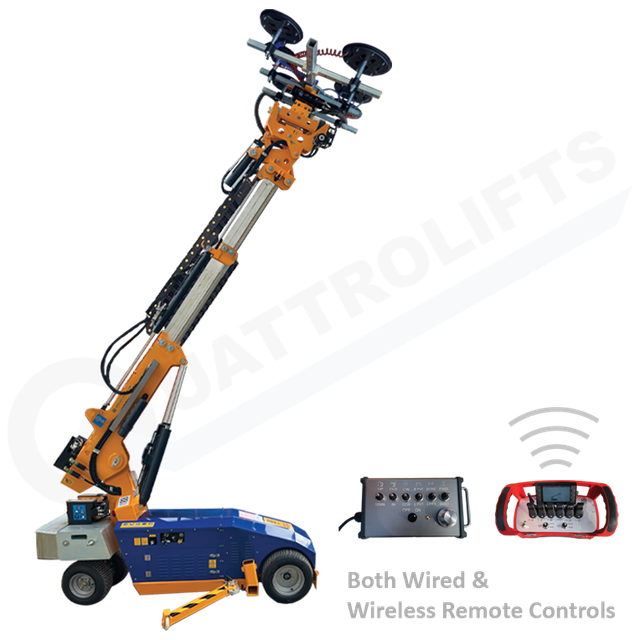
Vector
Lifting Capacity
1,800 lbs
Use Case
On-site
Drive
Self-propelled
Vector
Lifting Capacity
2,200 lbs
Use Case
On-site
Drive
Self-propelled
Buying Guide
A full granite slab can exceed 1,000 lb (450 kg), and a 3 cm slab is heavier than a 2 cm slab of the same size. Pick a machine whose rated capacity comfortably clears your heaviest slab. Quattrolifts granite lifters run 330 lb to 1,800 lb (150 to 820 kg).
Polished granite is flat and non-porous, so it seals firmly with standard suction pads. Honed or leathered granite finishes need foam vacuum pads to keep the seal reliable. Specify your finishes when you request a quote.
In-shop machines (Mule, Glassboy) handle granite at the saw, the polisher, and the loading dock. On-site machines (Vector) carry battery power and off-road tires for jobsite delivery and install. Forklift-mounted Omni units bridge both.
Hand-carrying granite slabs is the main source of back and finger injuries in countertop shops. A granite vacuum lifter lets one operator place a slab that previously took a crew, and removes the point-load cracking risk of edge clamps.
Most kitchen countertops are 2 cm or 3 cm granite; a 3 cm slab weighs about 50 percent more than a 2 cm slab of the same size. A vacuum lifter carries either safely and holds the slab flat for undermount sink and cooktop cutouts, so one installer can set a countertop that used to need a full crew.
Side-by-Side
Put any two machines side-by-side: capacity, weight, panel size, drive type, and vacuum system.
Guides & Resources
Guide
Granite, marble, and quartzite weigh roughly the same per slab: about 13 to 14 kg per square metre for each 10 mm of thickness (2.6 to 2.9 lb per square foot per 3/8 inch). The real handling difference is hardness and fragility, not weight. Quartzite is hardest, marble softest and most fracture-prone.
Read guideSafety
Move stone and granite slabs upright, never flat, supporting the full face so bending stress cannot build. Use a vacuum lifter rated above the slab weight, lift slowly, keep the load close, and clear the crew from underneath. Most cracks come from flex and point loads, not weight alone.
Read guideTechnology
A slab lifter is a machine that grips and moves heavy stone, glass, or metal slabs using vacuum suction or mechanical clamps. Vacuum slab lifters seal suction pads against the slab face, then a pump removes air so atmospheric pressure holds the load, letting one operator place panels safely.
Read guideFAQ
Also Lifted by Quattrolifts
Next step
Tell us about your panel sizes, jobsite conditions, and crew. We will recommend the right Quattrolifts machine and ship from our US warehouse.